
In the last few weeks, we’ve written a bunch of proposals, and with that comes a lot of research. We really try to do good research to understand the brands we’re telling stories for.
But let me tell you something I’ve found: Companies are terrible at writing compelling About Us pages. And it made me realize why some brands have a hard time wrapping their heads around brand storytelling.
I could have pulled this from fifty different websites this week, so I'm just going to make one up. But I promise you've read this exact page before.
"Founded in 2009, Company A began with a simple mission: to help businesses operate more sustainably. Over the past fifteen years, we've grown from a small team of three to over 200 employees across four offices. In 2016, we launched our flagship platform, which has since been adopted by more than 500 companies worldwide. In 2019, we were recognized as one of the fastest-growing firms in our sector. Today, we continue to push the boundaries of what's possible, guided by our commitment to innovation, integrity, and impact."
I think most of us read that and feel absolutely nothing. And the weird part is, the company behind it is probably doing genuinely interesting work. Real people, real decisions, real struggles to get where they are.
But none of that made it onto the page, and it doesn’t exist anywhere online.
What made it onto the page is a sequence of events. Things that happened, arranged in order. And then we grew. And then we launched. And then we won an award. And then, and then, and then.
This is something I think about a lot, honestly. Because the raw material is almost always there. The milestones are real. The people are real. The impact is real. But when you arrange all of it into a tidy chronological sequence, something dies. The brain hears that pattern and just... moves on.
There's actually science behind why.
Dr. Paul Zak ran this experiment that I keep coming back to (I know, I've referenced him before, but it keeps being relevant). He showed people two versions of a video about a father and his young son. Same people in both. One version had real tension. The father is struggling. His son is terminally ill. There's this weight to every scene because you know what's coming but you don't know how he's going to handle it.
The other version was flat. Father and son at the zoo. Nice moments. Nothing at stake.
Here's the part that gets me. His team drew blood before and after each viewing. The version with tension triggered cortisol (attention) and oxytocin (empathy and trust). The flat version? Nothing measurable. Not a weaker response. Zero response. The brain processed it and filed it away as background noise.
The difference wasn't the people. Wasn't the production quality. It was whether or not there was someone in the story who wanted something and was having a hard time getting it. That's really it.
So think about that About page again.
What if, instead of the timeline, you met the founder?
She tells the story of growing up in a house where both parents were entrepreneurs. She saw the late nights, the missed events, the lost weekends, and years. That pain pushed her to ensure that no small business missed the important life events, and this technology is charting that path.
Same company. Same fifteen years of growth. But now there's a person in it. And where there's a person with something at stake, there's a reason to keep reading.
I think the simplest filter for any brand thinking about storytelling is just this: is there a person in here who wants something and is having a hard time getting it? If the answer is yes, you probably have a story. If what you have is a list of good things that happened in order, you have a timeline.
And I've never seen a timeline change how anyone feels about a brand.
_____________________________________________________________________________________
WHAT WE’RE WATCHING THIS WEEK:
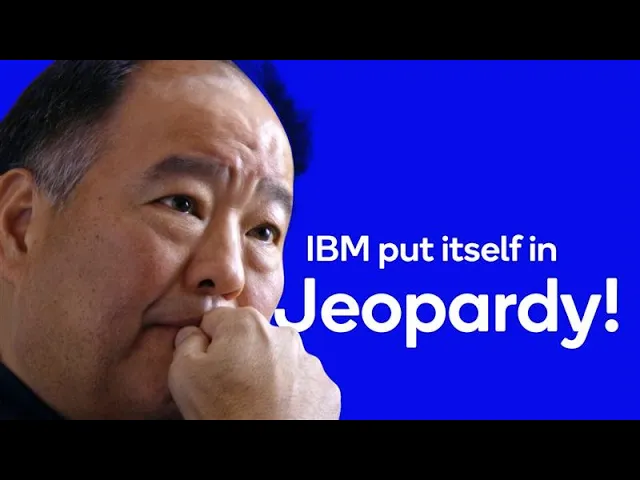
Who is….Watson? The Day AI Went Prime Time
I remember watching this moment in 2011. Watching Watson take on the best to ever play Jeopardy. So this is a fun doc.
But, beyond that, it’s a really strong reminder that brands are full of interesting people with meaningful connections to the stories. Think about all the tech advances, breakthroughs, and insights; there is so much room for powerful brand storytelling that goes entirely untapped.
And it’s all so much more interesting than any commercial I’ve seen. I would take 100 of these over pretty much any commercial. And I’m likely to think about IBM more often because of this film.

Author:
Braden Dragomir


