
We’ve been doing this work - what we’re today calling Brand Funded Documentary - for over a decade now. It’s taken a lot of shapes and forms, but mostly lives in the idea of Short Docs. 3 to 20-minute films, following the story of a real person, through their perspective on something in the world.
Often, when we start a conversation with a brand that hasn’t done this work before, there are many questions. Sometimes is’s about finding a story. Sometimes it’s about distribution. But more often than not, it’s about the business case: Why or how should we be thinking about this investment?
The good news is, you know a real story, told well, can do something traditional advertising can't. But the gap between "we should tell a documentary story" and "here's how we measure whether it worked" is wide enough that many good intentions stall there. Budgets and ROI matter.
We've been working on this problem for a while. Not the storytelling part. The structure of defining the business case for storytelling. The thing that can connect a film to a measurement plan, a distribution strategy, and a specific business outcome before anyone picks up a camera.
And somewhere along the way, we noticed a pattern.
When we looked back across a decade of documentary projects, across industries, budgets and countries, the stories we've told were solving four distinct business problems. Not dozens. Four. Each one requires different characters, different conflicts, different levels of brand visibility, different distribution, and different metrics. But we kept seeing the same four show up.
We started calling them Narrative Intent. And it’s become our goal to clearly identify which Intent the story needs to address.
Those four intents are Awareness, Affinity, Action, and Advocacy.
They're not stages in a funnel (a brand with strong awareness and zero advocacy has a completely different problem than a brand nobody's heard of). They're decisions. And the decision needs to be made before any creative work begins, because the Intent changes each decision downstream.
Which character is the audience going to connect with?
What Story Type would lead to the right type of engagement?
Whether the brand appears on screen or stays invisible?
Where the film lives?
What you measure?
All of those can be shaped by the intent.
Get it right, and the film has a reason to exist that goes beyond "we made something beautiful." Get it wrong, and you end up with a film that's well-crafted but strategically disconnected.
I didn’t want to go to deep for you with a really long email, so I’m super excited to share that this deep dive is up on our new website - under Field Work - softly launched this week! Each intent gets broken down with the science behind why it works, real brand examples, and the strategic implications for production and distribution.
Read the full Narrative Intent framework →
If you're planning a brand film this year, or evaluating one that's already in the pipeline, the question worth asking first: what is this story's intent? Not "what's the story?" Developing the story comes next.
__________________________________________________________________________________
WHAT WE’RE WATCHING THIS WEEK:
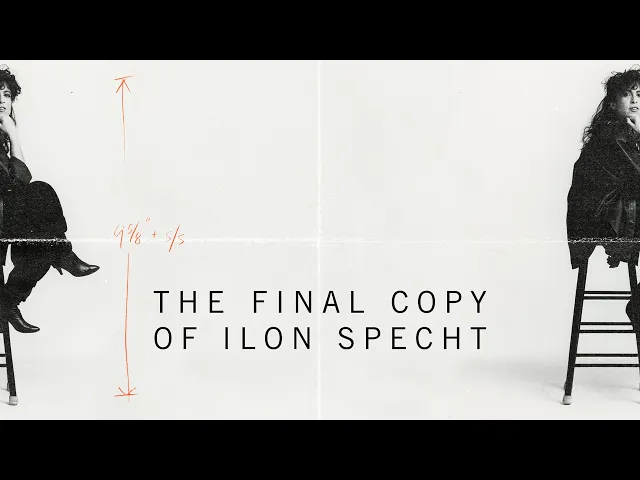
The Final Copy of Ilon Specht - Breakwater Studios
This is one of those films where if you work in this space, you’ve seen it at least once. But Ben Proudfoot and the team at Breakwater did a beautiful job telling the story of Ilon Specht, the woman who created L’Oreal’s iconic line “Because I’m Worth It”.
If you’re curious about the power of a well-told story, this film has gone on to win the 2025 Cannes Lions Grand Prix in Film, 2026 AdAge Branded Content of the Year, 2025 Grand LIA, a Clio, Brand Storytelling’s Director Award, multiple Telly Awards, and, I’m sure, many more.
To us, this is what’s possible when you pair a great story with great storytellers and let that work cook.

Author:
Braden Dragomir


