


INSIGHTS
Narrative Intent: A Framework for Brand Storytelling That Actually Works
Most brands tell stories without knowing what they're trying to accomplish with them. They produce a film, post it, measure the views, and wonder why nothing changed.
Most brands tell stories without knowing what they're trying to accomplish. They produce a film, post it, measure the views, and wonder why nothing changed.
The problem isn't usually the story itself. It's that nobody decided what the story was supposed to build before they started making it. A film designed to make someone feel something is fundamentally different from a film designed to make someone do something. A story built to earn trust operates on different principles than a story built to earn advocacy. When brands treat all storytelling as a single activity with a single goal, they get mixed results and blame the medium.
We call that missing decision Narrative Intent.
It's the discipline of defining what a story needs to build through the audience: Awareness, Affinity, Action, or Advocacy.
Your Narrative Intent should be in place before you make a single creative decision. Because that intent, it changes everything that follows. The character you choose, the conflict you lean into, how visible the brand is, where the story lives, and what you measure.
Most production companies start with "what's the story?" That's the wrong first question. The right first question is "what does this story need to solve?"
Why emotion matters more than information
Before getting into the framework, it's worth understanding why storytelling works as a brand tool at all.
Most of us would like to believe we're logical beings who make rational choices once we've been adequately informed. The truth is, we're not.
In 1994, neuroscientist Antonio Damasio published Descartes' Error: Emotion, Reason, and the Human Brain, research that fundamentally changed how we understand decision-making. Damasio documented patients with damage to the parts of the brain responsible for generating emotions. Their intelligence was intact. Their memory worked fine. Their language was normal. But they all shared one peculiar trait. They couldn't make decisions.
One of his most well-known patients, a man Damasio called "Elliot," was formerly a successful businessman and model father. After frontal lobe surgery, Elliot still tested in the 97th percentile for IQ. But he couldn't choose where to eat lunch. Couldn't decide which colour pen to use. Couldn't make an appointment without deliberating for thirty minutes. His life fell apart, not because he couldn't think, but because he couldn't feel.
Damasio's research proved that emotion isn't the enemy of good decision-making. It's a prerequisite. For brands, the implication is clear. Communications that connect on an emotional level aren't a nice-to-have. They're the mechanism through which decisions actually happen.
(For a deeper look at how stories physically change the brain, see Wired for Story: Why We Remember Stories Better Than Anything Else.)
Damasio's research proved that emotion isn't the enemy of good decision-making. It's a prerequisite.
The Four Intents of Brand Storytelling
Each of these represents a different outcome storytelling can build. Each one changes the creative and strategic decisions that follow. And each one requires a different kind of story.
Awareness
Does the brand register at all?
Awareness is about breaking through. Effective storytelling here can help an audience identify a problem they didn't know they had, alert them to a potential solution, or firmly establish a brand in their mind as the most desirable provider of that solution. The goal is to place the brand in the consideration set so they're top-of-mind when the need arrives.
One of the most common issues brands face is a gap between the story they believe they're telling and the story their audience is actually receiving. The internal narrative says one thing. The audience experience says something else entirely. Awareness storytelling closes that gap by making the brand's values visible through real human experiences instead of claims.
Volvo's "Defiant Pioneers" series for Sky Atlantic is a strong example of what this looks like when it's done well. "The Birdman," the seventh installment in the series, follows Professor Carl Jones, a conservation biologist who saved five bird species from extinction and inadvertently prototyped a methodology for rewilding that scientists now believe is one of the most effective approaches to counteracting climate change. It's an eight-minute film with a real character, real stakes, and genuine dramatic structure. It was a finalist at the Tribeca Film Festival for branded storytelling. And across the entire film, the Volvo car is on screen for roughly twenty seconds.
The series wasn't designed to sell cars. It was designed to register Volvo as a brand that stands for innovation, environmental commitment, and pioneering spirit. And it worked. The first two years of the Defiant Pioneers partnership contributed to Volvo's highest sales in 25 years. Not because people watched a film about a bird and then bought a car. Because the story placed Volvo in the consideration set by associating it with values the audience already held. That's what Awareness storytelling does.
Affinity
The audience knows the brand. But do they care?
In contrast to the more rational work of Awareness, Affinity is where storytelling appeals to the heart. This is where emotional connection happens. Where preference is built. Where the relationship moves beyond the transactional.
Affinity is the positive predisposition an audience feels toward a brand upon identifying the intersection between their own attitudes, values, and beliefs and those of the brand. It's the emotional connection that transforms a customer into someone who genuinely prefers you, even when the alternatives are cheaper or more convenient.
The most distinctive characteristic of Affinity stories is that they intentionally avoid promoting features and benefits. Often they relegate any mention of the brand itself to a subtle signal that's seen but not spoken. At their core, affinity-driving stories focus on people instead of product. Shared values instead of value propositions.
YETI has built a company valued at over $1.5 billion largely through this kind of storytelling. Since 2015, they've produced more than 75 short documentary films through YETI Presents. These films tell stories of fishermen, cowboys, snowboarders, and adventurers. Products rarely appear. The brand is only mentioned in the credits. As YETI's former Head of Content Scott Ballew described it, "People don't wear YETI hats because they're proud of their ice. They wear them because the brand stands for something bigger." He went further: "We're not telling you what the soul of YETI is. It's more like, go find your own soul, and however you interpret that, that will determine how you interact with nature, with yourself, with your family. The films were more of a reflection of the people watching them than of the brand."
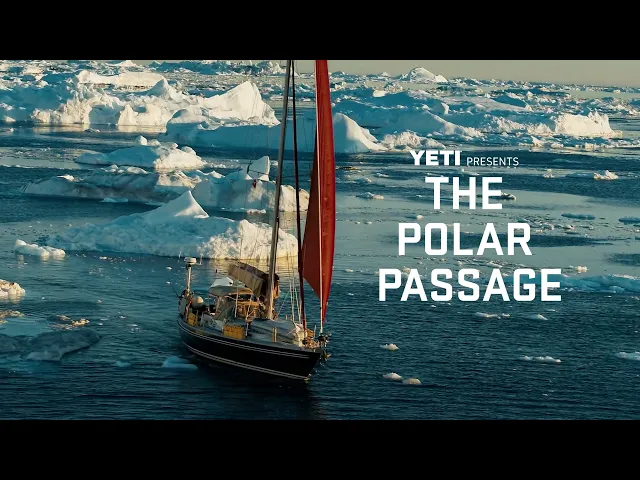
That's Affinity at its most powerful. The stories tap into universal human truths about determination, family, loss, and pursuing what makes us feel alive. The brand earns affinity not by explaining itself but by enabling stories people actually want to watch.
Action
Can storytelling move someone to do a specific, measurable thing?
When the goal is Action, storytelling is used to prompt a desired behaviour. Sales inquiries, trial purchases, clicks, subscriptions, donations, applications. The vocabulary here is built around measurable outcomes.
This is also where storytelling and direct response are most in tension with each other. Good advertising tends to be direct but rarely tells a real story. Good storytelling tends to build belief but rarely includes a clear call-to-action. The tension is real, and most brands feel it.
Paul Zak's research through Immersion Neuroscience offers the clearest bridge between the two. Zak's team has measured neurological engagement in over 50,000 brains using wearable technology that tracks how much the brain values an experience second by second. What they've found is that when the brain is immersed in a narrative, what Zak calls "peak immersion," it's not just paying attention. It's primed to act.
In his book Immersion: The Science of the Extraordinary and the Source of Happiness, Zak documents that immersion predicts not just attention but downstream behaviour. His platform can predict things like sales increases from advertising and in-store purchases with accuracy rates above 85 percent. The practical implication is specific. Branding, messaging, and calls-to-action placed at moments of peak narrative immersion are measurably more likely to drive the desired behaviour.
This is what separates Action storytelling from simple advertising. Advertising interrupts. Storytelling with the intent of Action earns attention through a narrative and then converts that attention at the moment the brain is most receptive. The dramatic structure does double duty. The tension and resolution pattern that makes any good story work is also the mechanism that creates the neurological conditions for action.
Zak built a framework around this called SIRTA: Staging, Immersion, Relevance, Target, and Action. The key insight for brands is that Action stories still need to be real stories. They still need characters, conflict, and structure. The difference is that they're designed with a specific, measurable behavioural outcome in mind, and the call-to-action is placed where the brain is most ready to respond.
Advocacy
The audience knows and likes you, but will they fight for you?
Advocacy shares a border with Action, but the outcome is different. Here, storytelling is designed to prompt an audience to willingly advocate on behalf of the brand. Spreading positive word-of-mouth. Championing the cause. Even defending it against critics.
This is where brands flip the script entirely, inspiring their audience members to become the storytellers and drivers of the brand narrative.
Advocacy storytelling aims to convert passive recipients into active participants and vocal evangelists who share their responses, their reactions, and even the stories themselves. The intended response is, "I absolutely have to tell someone about this."
Patagonia has built its entire brand on this principle. The company describes itself as "a collective of storytellers who make films on behalf of our home planet," not on behalf of the brand. Major productions like DamNation and Public Trust take explicit positions on environmental issues. Their distribution model reinforces grassroots organizing. DamNation premiered at South by Southwest, followed by a nine-city tour, 23 free community screenings organized with grassroots organizations, and a tour to Patagonia retail stores before reaching a streaming audience. Each touchpoint created opportunities for audience activation, not just viewing.
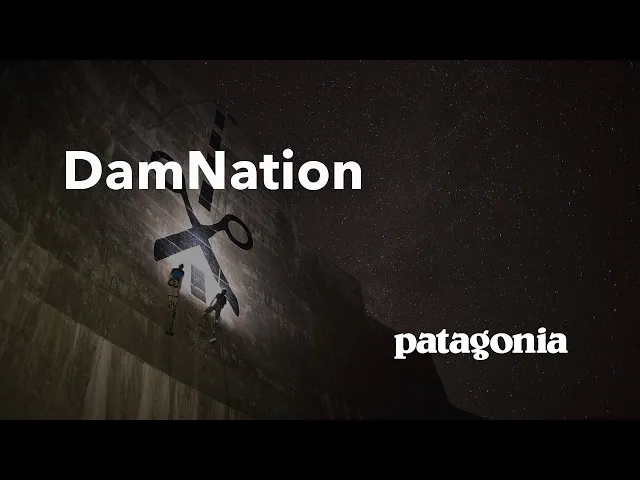
The films contain no product placement and minimal brand presence. The company's philosophy is that authentic storytelling is compromised by commercial elements. Audiences engage with content that transports them into the outdoor experience and environmental mission. The brand association follows naturally from that alignment.
Patagonia demonstrates that brands can take explicit activist positions when those positions are authentically aligned with brand identity and audience values. The risk of alienating some consumers is offset by deepened loyalty among core audiences and the cultural authority that comes from principled advocacy. Storytelling becomes a tool for movement building, not just brand building.


Defining the intent before you start
Narrative Intent is not a creative template. It's a strategic discipline. Define what a story needs to build before you build it, and every other decision gets clearer.
We see many brands deploying stories without knowing what each one is supposed to accomplish. Others have invested heavily but in only one area, usually Awareness, while neglecting the emotional and behavioral work that Affinity, Action, and Advocacy require.
The most effective brand storytelling isn't a single film or a one-off campaign. It's a system where every story has a defined purpose. Awareness creates the opening. Affinity builds the bond. Action converts the belief. Advocacy earns the reach. Each story reinforces the others because each was designed with a clear intent from the start.
The starting point is always an honest assessment of what's already there. What stories is the brand currently telling? What was the intent behind each one? Can anyone in the organization articulate it? If the answer is no, that's where the most important work begins.
Before you write a brief. Before you hire a production company. Before you turn on a camera. Define the intent. That one decision will shape everything that follows.

Author:
Braden Dragomir