INSIGHTS
Wired for Story
Why We Remember Stories Better Than Anything Else

I think I was seven or eight years old when I first read Harris & Me by Gary Paulsen. Well, in truth, my mom likely read it to me, but strangely enough, that's not what I remember.
It is the first time I really remember being pulled into a story. To this day, I can still see the farm, I can feel those visceral, breathless laughs, and mostly, I still have a fear of roosters. Yup, Ernie the Rooster terrorizing the narrator still lies somewhere in my memory from a story I read as a kid, and it actually influences how I walk around an actual farm.
It's hard to believe that a fictional rooster in a fictional story from my childhood has stuck with me for nearly thirty years. Not only that, but to this day it has influence over my thoughts and my actions.
A craving for story
For tens of thousands of years, stories were how humans passed down critical information. Before the written word, before any kind of recorded medium, the survival of communities depended on someone's ability to tell a story well enough that it stuck. Where to find water. Which plants would kill you. Who to trust.
Over time, as we gained new mediums, we expanded storytelling from survival to knowledge to entertainment. All of this has fuelled a collective, insatiable appetite for stories.
And our brains are always searching for meaning.
Red. Fox. Balloon.
I just gave you three random words, and already, I would bet that your brain is scrambling to create a narrative that makes sense of it all.
One of the remarkable things about the human brain is its ability to recognize patterns. Stories, being a predictable pattern of beginning, middle, and end, are extremely engaging to us because they satisfy that need. The brain latches onto pattern. And story is the most enduring pattern we have.
Plot is the engine of engagement
When I first started learning about how to find and tell stronger stories in our documentary work, I had flashbacks of my Grade 8 English class. Conflict, rising action, resolution. Simple, effective, story structure.
The more I learned about storytelling, the more I discovered just how pervasive that simple structure was everywhere I looked.
Dan Harmon, known for creating shows like Community and Rick and Morty, has his own approach to story structure he calls The Story Circle. I find it to be one of the more simple and character-driven examples of a plot structure. Here's what it looks like:
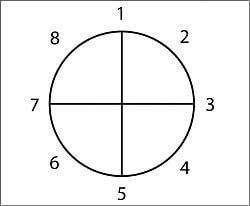
A character is in a zone of comfort,
But they want something.
They enter an unfamiliar situation,
Adapt to it,
Get what they wanted,
Pay a heavy price for it,
Then return to their familiar situation,
Having changed.
Whether a story follows the classic arc, the Story Circle, or Joseph Campbell's Hero's Journey, the importance is the same. A patterned story structure keeps an audience engaged by preventing their minds from wandering. An unengaged brain is one that will wander away from what you're trying to tell them.
And this isn't just intuition. Neuroeconomist Paul Zak's research at Claremont Graduate University demonstrated exactly why structure matters on a chemical level. His team showed participants two versions of a video about a father and his young son, Ben, who is dying of brain cancer. One version followed the classic dramatic arc. Tension, struggle, vulnerability, resolution. The other version was flat. Same father, same son, just walking around a zoo. No structure.
The dramatic version triggered significant increases in two neurochemicals. Cortisol, the stress hormone, which focuses attention and tells the brain "something important is happening here, pay attention." And oxytocin, the bonding hormone, which promotes empathy, connection, and trust.
The flat version? No significant change in either.
Without the tension-release pattern of structured storytelling, the brain simply doesn't engage the chemical systems that drive attention and connection. As Zak summarized: "Stories that fail to follow the dramatic arc of rising action, climax, and denouement, no matter how outwardly happy or pleasant those stories may be, elicit little if any emotional or chemical response."
That's what makes plot so critical. Structure isn't a creative preference. It's the mechanism that tells the brain whether to stay or leave.
The character takes on a conflict
When you look deeper into all of these structures, they all share a pattern organized around characters.
A character encounters a conflict. They decide to take on that conflict. There is a journey with obstacles. And in the end, they resolve or overcome that conflict.
People connect best with other people. In storytelling, we favor narratives centered around a strong character.
In Zak's research, his team found that "to the brain, good stories are good stories, whether first-person or third-person, on topics happy or sad, as long as they get us to care about their characters."
As long as they get us to care about the characters. People.
According to Steven Brown, who runs the NeuroArts Lab at McMaster University, "Our brain results show that people approach narrative in a strongly character-centred and psychological manner, focused on the mental states of the protagonist of the story."
Again, people.
Psychologists Melanie Green and Timothy Brock published foundational research on what they called "narrative transportation," a state where a person becomes so absorbed in a story that they are cognitively and emotionally transported into the narrative world. When transportation occurs, the real world temporarily fades, time perception shifts, and critically, the transported individual's defences against persuasion drop dramatically.
This isn't because they're being tricked. It's because their brain is consumed by the story. The mental effort required to stay inside the narrative world leaves fewer resources for the kind of skeptical counterarguing that normally protects us from being influenced. You're not evaluating claims. You're living alongside a character.
And here's maybe the most surprising finding. Researchers Markus Appel and Tobias Richter discovered what they called the "sleeper effect." Unlike factual persuasion, which tends to decay quickly, story-based persuasion often strengthens over time. Days or weeks after hearing a story, transported individuals sometimes show stronger attitude change than they did immediately after. The story integrates into memory without the "source tag" that would mark it as someone else's attempt to influence you.
You remember the emotional truth long after you've forgotten it was a story at all. That's Ernie the Rooster. Thirty years later, I don't remember being read to. I remember the farm.
Mirror neurons and seeing each other
To me, one of the most interesting areas of the science around storytelling is the theory of mirror neurons. These are brain cells that fire not just when we perform an action, but when we see someone perform the same action. Yes, you read that right. Seeing someone else do something triggers our brain in the same way as if we experienced it ourselves.
One of the theories currently being researched by V.S. Ramachandran is that mirror neurons are part of the system that enables us to see other people as intentional beings. Someone with purpose and intention. That, in part, could be the starting point of things like empathy and even language.
While the science is still early, there is a lot of interesting work here about how we perceive other people, and how by watching someone else experience something, what happens to them affects us on an individual level.
So, how do you use all this science?
Story isn't some buzzword. It's a complicated and deliberate process that involves making intentional choices about your characters and your plot.
In its simplest form, the strength of your plot is going to drive your audience's engagement. The more you can keep an audience inside the story, the more likely they'll stay long enough to believe what you're telling them.
The strength of your characters and the emotional investment they create is going to determine how much people care.
We can use this science when we start to look at where stories fit within your Four Realms of Brand Storytelling. Taking the time to understand the characters so we're drawing on the right emotions. Understanding that how you structure the story will play a significant role in how much your audience watches and engages.
So, does that mean storytelling is more science than art? And does applying this scientific storytelling formula guarantee an impactful outcome?
Paul Zak doesn't think so. From his research into the neuroscience of narrative:
"Even with millennia of practice, creating a great story is difficult. The emerging science of narrative can guide the art, but it cannot replace it. Humans are just too complex for an algorithm to generate art. And this is where the artist comes in."
The pursuit of memorable stories is worth the effort. And your audience thinks so too.

Author:
Braden Dragomir